Choosing an alfalfa variety involves more than selecting a seed. It’s important to match genetics to the way you farm, the challenges you face and the outcomes you want to achieve. Whether your priority is optimizing forage quality, protecting stand persistence, increasing harvest flexibility, improving profitability or a combination of those factors, your alfalfa should support the way your operation works.
The best fit depends on your goals and management strategy. Understanding what each variety is designed to deliver can help you make a decision that pays dividends for years to come.
Start with what alfalfa already does for you
Before considering traits, it’s important to remember why the crop earns its place in the rotation.
Alfalfa is a perennial legume. It partners with Rhizobia bacteria to capture nitrogen from the air, and that nitrogen expands in roots, crowns and residue over the life of the stand. When terminating the stand, it becomes available to whatever you plant next.
Nitrogen levels can be significant. In multi-site trials across Utah, researchers estimated that a terminated alfalfa stand supplied roughly 334 pounds of plant-available nitrogen per acre during the following growing season.1 In those same trials, small grains planted after alfalfa needed additional nitrogen fertilizer to optimize yield in only one case out of eleven.1 The same pattern holds in corn, the most widely planted crop in the country. Across 16 field locations in Minnesota, researchers found that first-year corn following alfalfa needed little to no additional nitrogen, thanks to the nitrogen released as alfalfa roots and residue break down.2
Deep perennial roots do quieter work too. They help build organic matter and improve soil structure, which can then help improve porosity and cut down on potential runoff and erosion. Perennial crops like alfalfa can also help break pest and disease cycles in your fields. Because the stand stays in place for years, it interrupts problems that build up under continuous annual cropping and can ease pressure on the crops that follow.
Then decide which traits fit your fields
From there, you can match specific traits to what your operation needs. Each one is designed to solve a particular challenge, so the right combination comes down to the goals and conditions on your acres.
UltraCut® Alfalfa Disease Package
Disease pressure is something every alfalfa grower manages, and it has the ability to quietly cost yield and shorten stand life. Anthracnose causes stem and crown rot and can reduce an affected harvest by 25%3, and a severe case can thin a stand through plant mortality. Aphanomyces root rot reduces yield and nutrient uptake and can open the door to secondary infections.
That’s why the UltraCut® Alfalfa Disease Package is a smart baseline for nearly any operation. It defends the crop at establishment and through in-season stress against a broad range of Aphanomyces and Anthracnose strains, and it shows an average 15% yield advantage over varieties without it in fields with disease pressure.4 If your ground runs wet or poorly drained, or you've watched stands thin out earlier than they should, it's especially worth building in from the start.
Roundup Ready® Alfalfa
Weeds compete with a new stand at the point it can least afford the competition, and weeds that make it into the bale are tonnage you do not get paid for.
Roundup Ready® Alfalfa gives you a straightforward weed control program with excellent crop safety. That means a stronger stand from the start and in the years that follow, along with better persistence over the life of the stand. It also means cleaner feed: fewer weeds in the bale means more consistent forage quality and fewer surprises in the ration.
HarvXtra® Alfalfa with Roundup Ready® Technology
HarvXtra® Alfalfa is built around three things that every operation is balancing: quality, yield and flexibility.
Every alfalfa plant contains lignin, the structural material in the stem that stiffens the plant as it matures. Lignin is also the part of the plant that rumen microbes can’t break down, and it forms cross-linkages that block the digestion of the fiber around it. Research on lignin and fiber digestibility has found that reduced lignin content improves fiber breakdown in the rumen.6
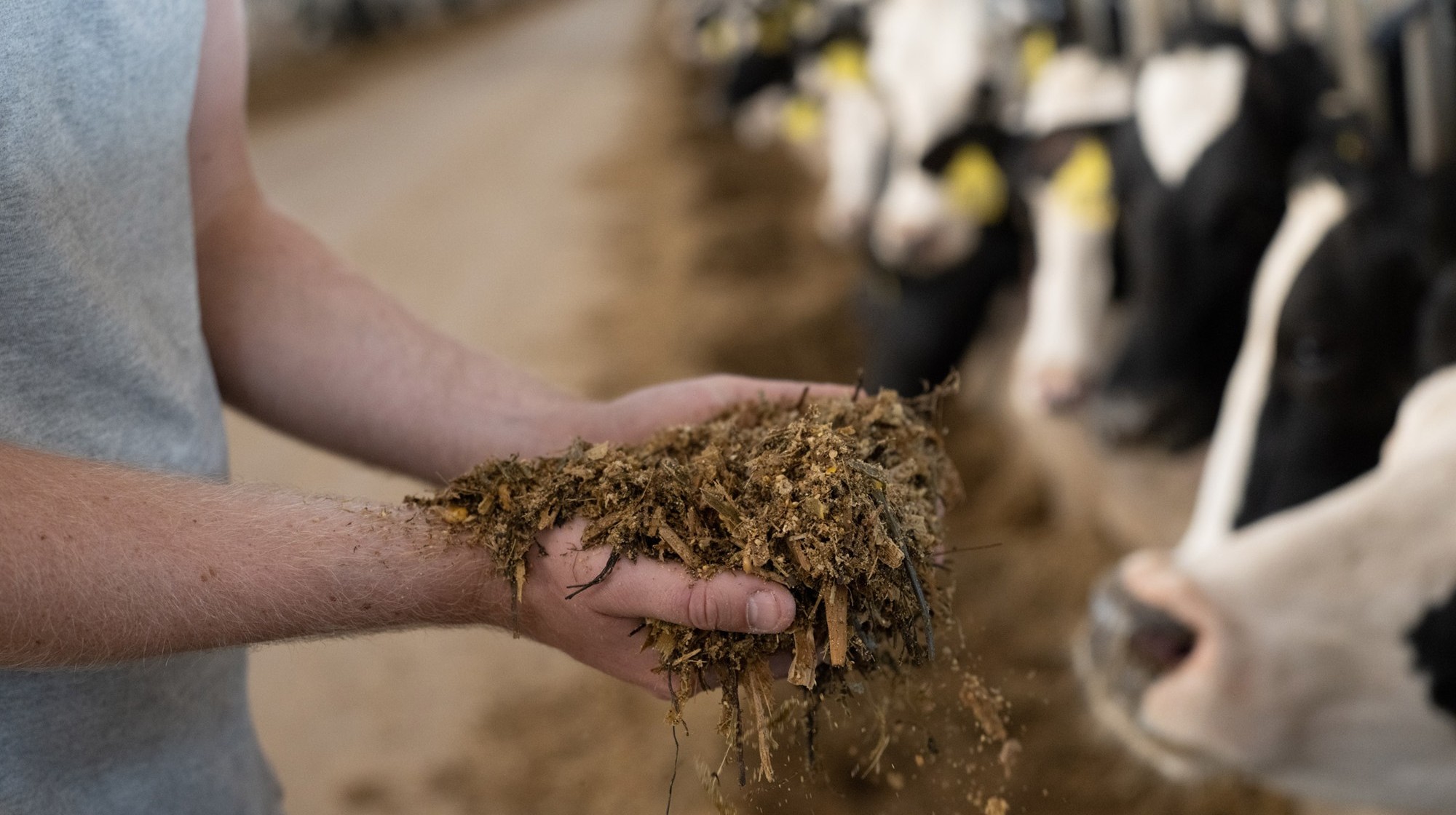
That’s where HarvXtra Alfalfa comes in. It’s bred to produce less lignin, which improves fiber digestibility, specifically a 14 to 20% improvement in neutral detergent fiber digestibility (NDFd) across cuttings compared with conventional varieties harvested at the same stage of maturity.5 The value shows up in the ration. For the cow, better breakdown means more energy pulled from every pound of forage, which can support intake and milk production.7
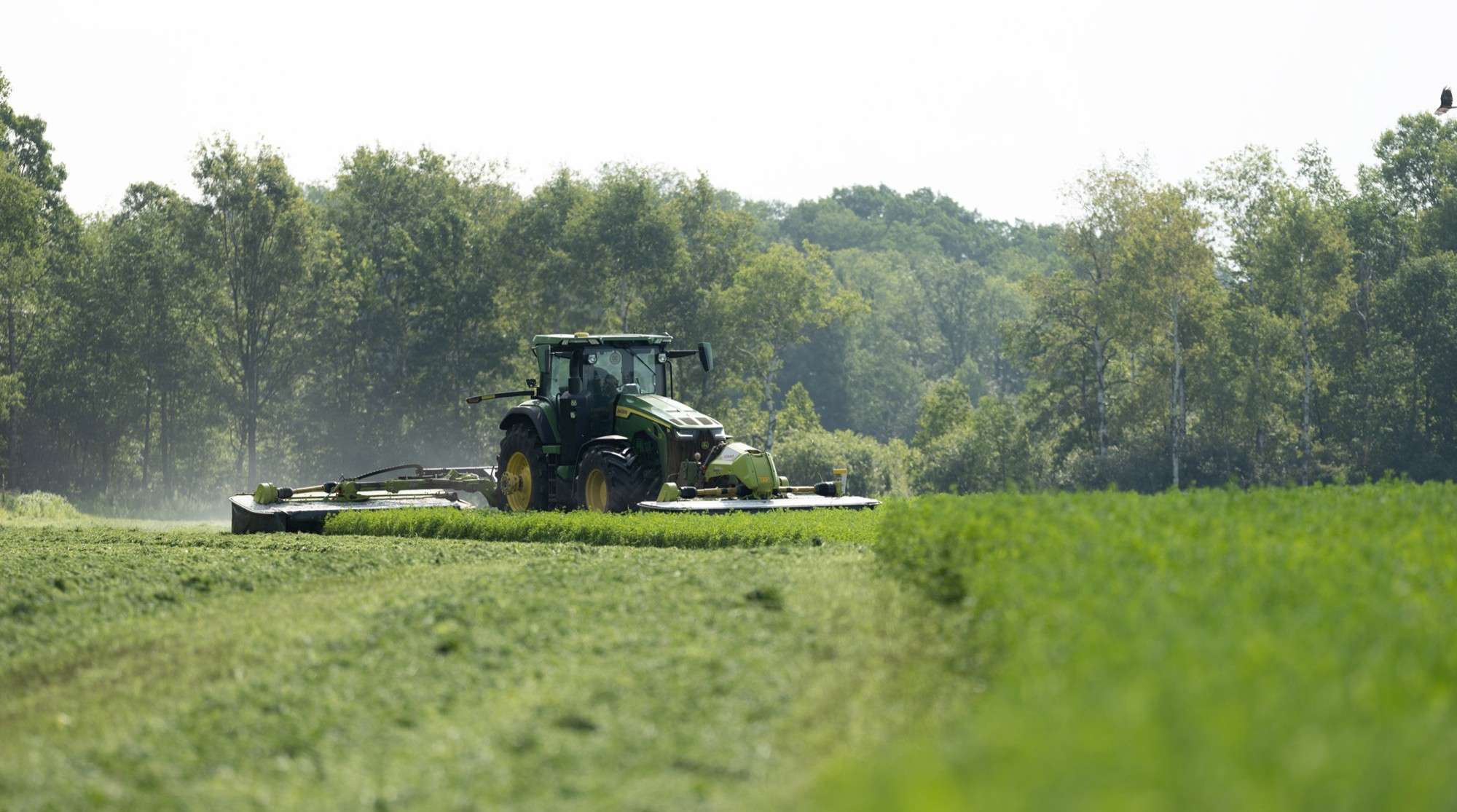
All of this gives you options. Hold your normal cutting schedule and take high-quality forage off the field. Or extend the cutting window up to 10 days for more tonnage without giving back the quality you’d normally lose in those extra days.5 Either way, the decision stays in your hands.
Match the trait to the problem
The right alfalfa is the one that fits the way your operation runs. UltraCut Alfalfa Disease Package protects what you plant, Roundup Ready Alfalfa keeps stands clean and productive, and HarvXtra Alfalfa gives you room to manage quality and yield on your terms. Together, they help you get more out of every acre and every cutting. Start with the challenge that matters most on your soil, and build from there. Have more questions about what alfalfa is right for you? Get in touch.
¹ Yost et al. research in Soil Science Society of America Journal on the nitrogen requirements of first-year small grains after alfalfa, including the plant-available nitrogen supplied by terminated stands to the following crop.
² Yost et al. research in Agronomy Journal, "Alfalfa Nitrogen Credit to First-Year Corn," examining the reduced nitrogen fertilizer needs of first-year corn following alfalfa across Minnesota field sites.
³ Research in Crop Protection on Colletotrichum americae-borealis anthracnose in alfalfa, reporting that yield can decrease by more than 25% during periods of extended rainfall or in irrigated areas.
⁴ Compared to conventional varieties without the UltraCut alfalfa disease package in fields with disease pressure in WI, MN, IA, PA, NY.
⁵ Data from Forage Genetics International trials comparing HarvXtra Alfalfa with Roundup Ready Technology 2017 FD4 commercial varieties to FD4 commercial checks, seeded 2013 and harvested 2014–2016 in Boone, IA; Mt. Joy, PA; Nampa, ID; Touchet, WA; and West Salem, WI.
⁶ Salfer, I. University of Minnesota Extension article, "Low-Lignin Alfalfa Can Improve Fiber Digestibility of Dairy Cow Diets," on the relationship between lignin concentration and neutral detergent fiber digestibility.
⁷ Miller et al. research in Journal of Dairy Science, "Influence of Fiber Degradability of Corn Silage on Lactational Performance, Nutrient Digestibility, and Ruminal Characteristics in Lactating Holstein Cows," 2021.